



Viết về decision-making skill
Đây là 1 skill cần phải “học” và có môi trường để học beyond the “Execution”.
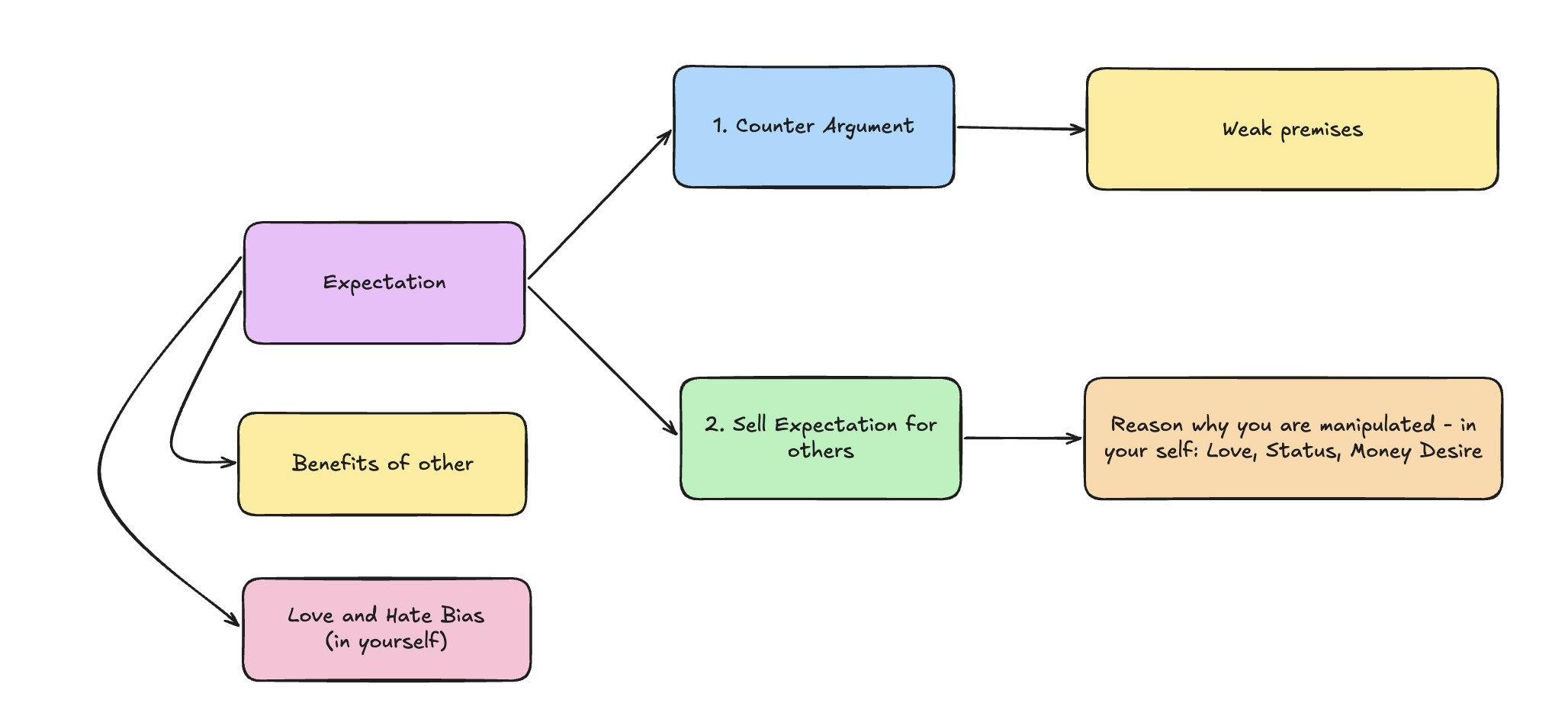
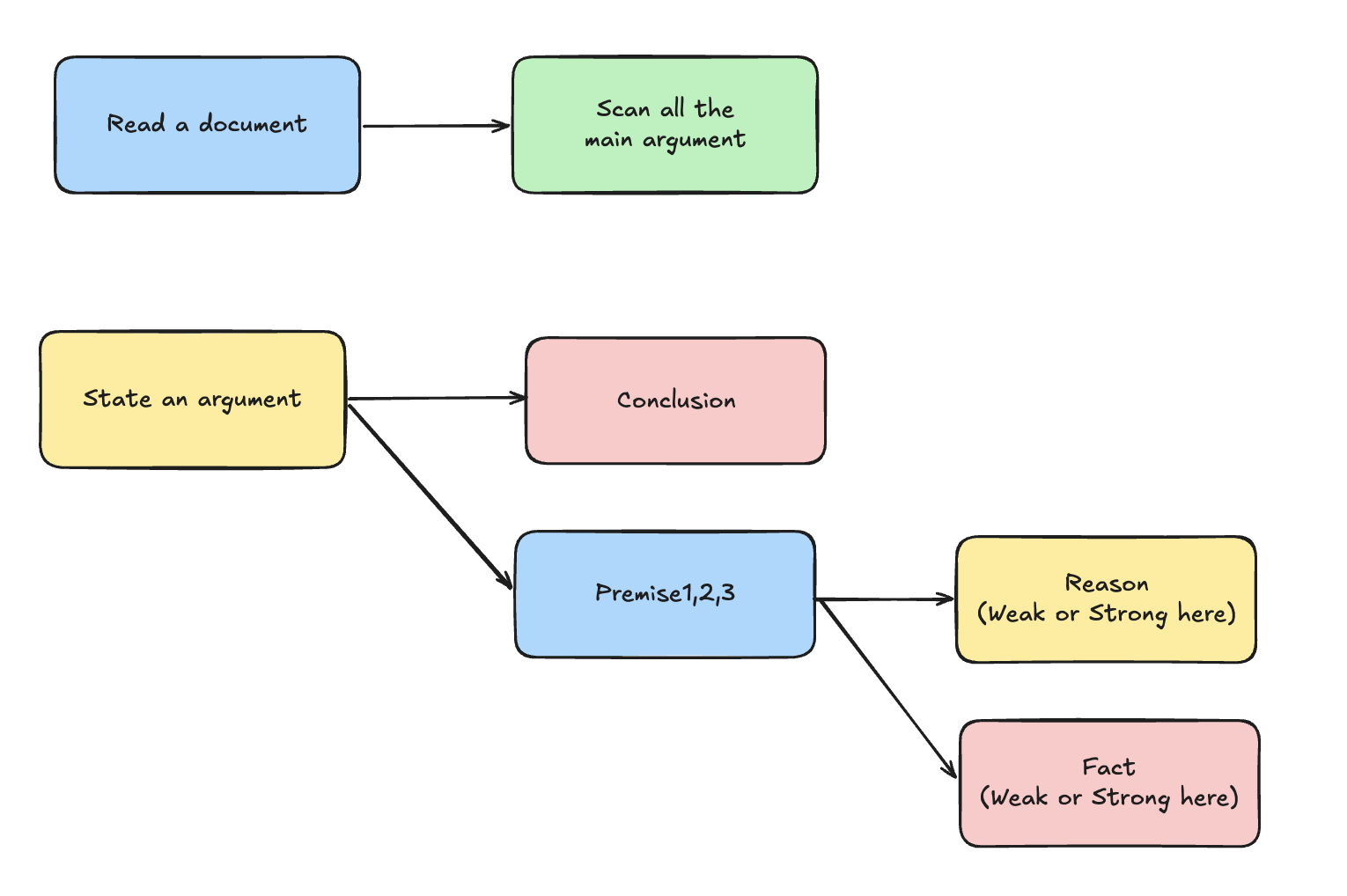
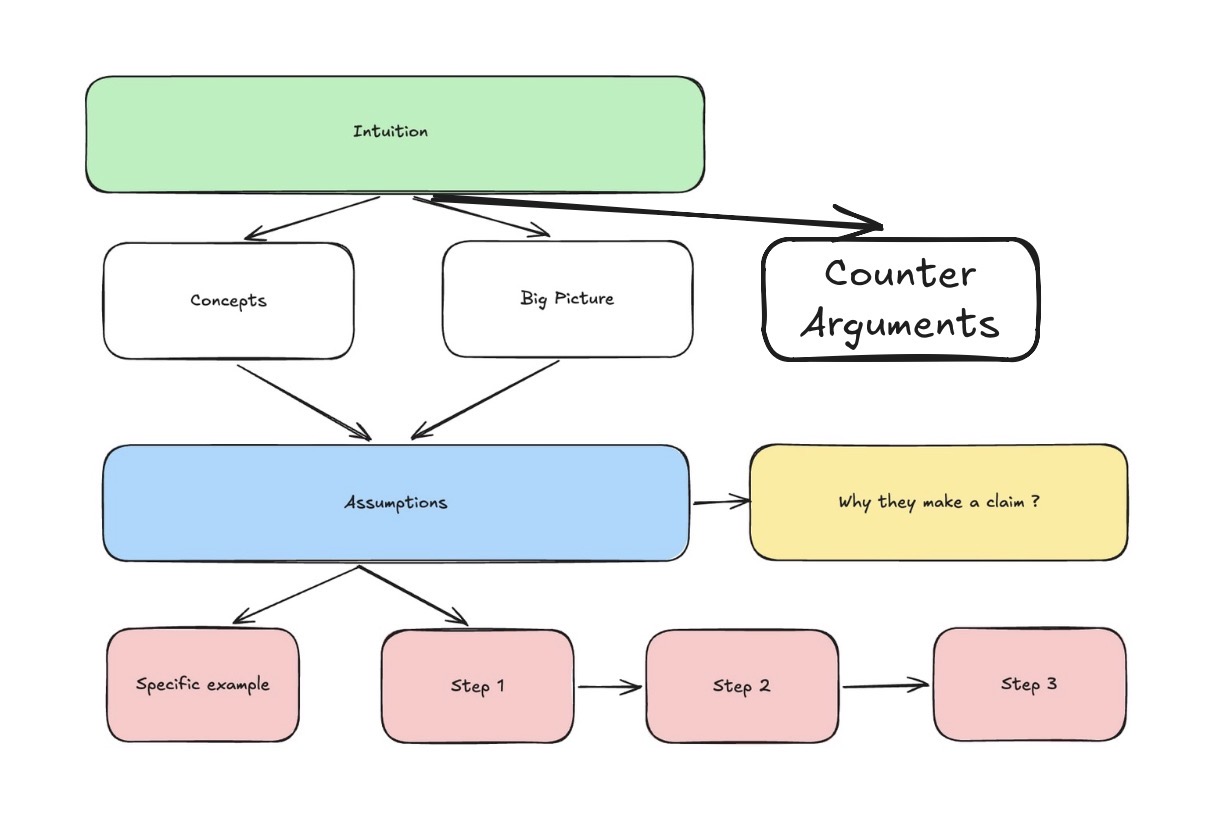
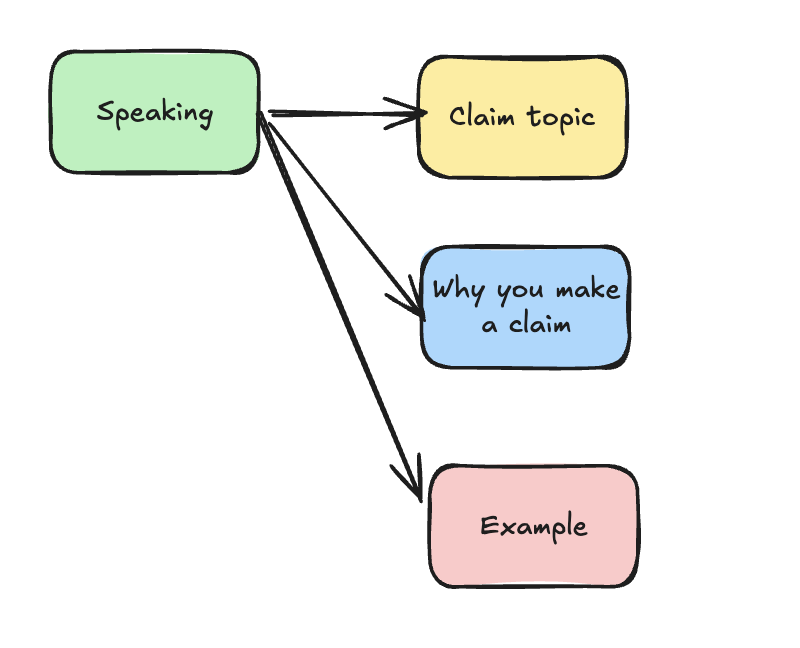
1. Break an argument
-
One time -> 1 argument is enough.
-
The real issue is … -> one-point argument.
-
If you have multiple arguments in a sentence -> other team can escape from addtional point by not answering directly the main point.
-
Supporting arguments and actions -> base on the one-point argument
-
You win an argument when your real issues is clear and the opposite sides do not have good answer for it.
2. How to make your argument
-
What is my one point?
-
What proves it?
-
How to make other sides answer your point ?
-
A clear point is better than a long answer.
3. What is real argument
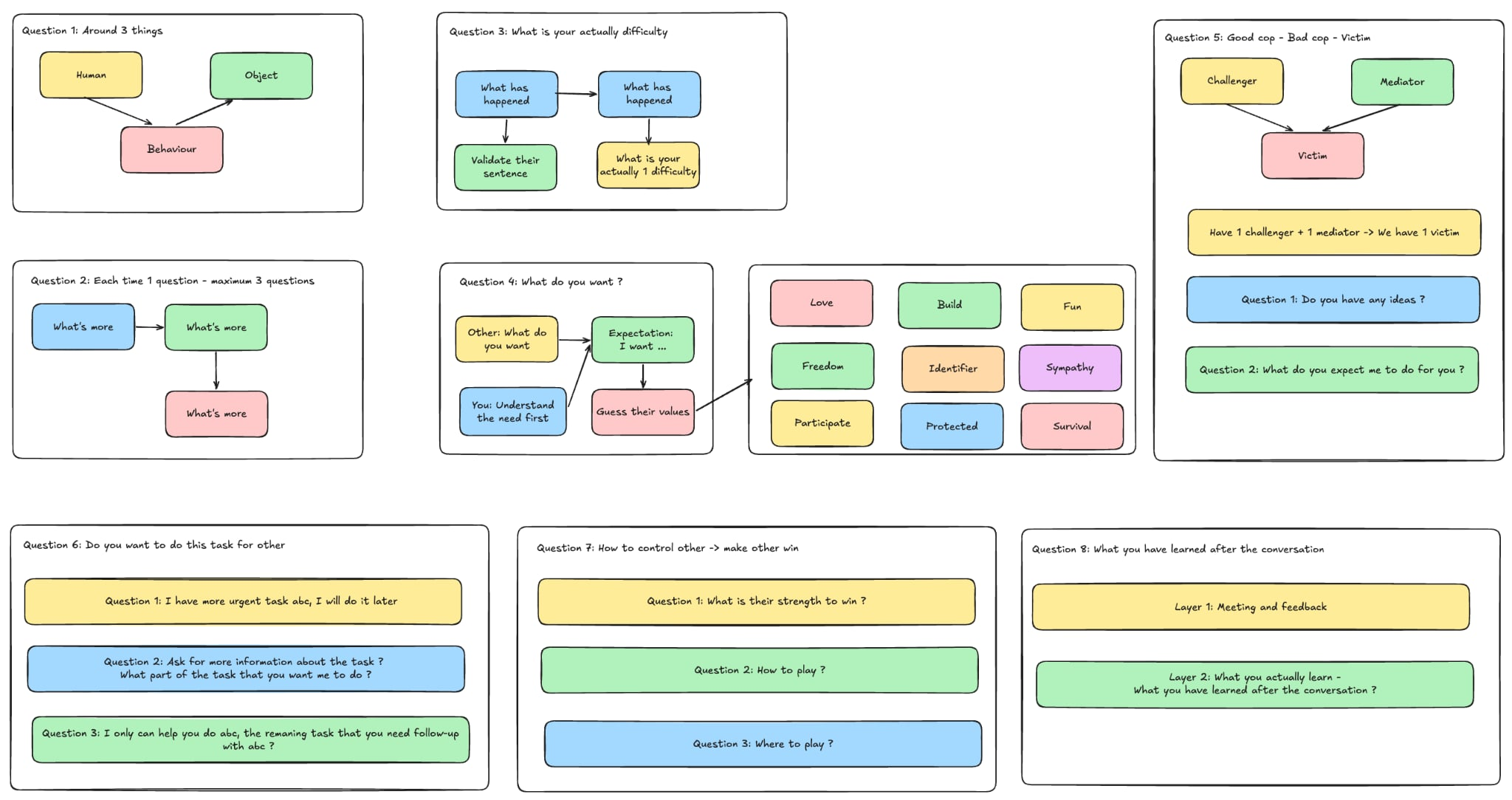
A useful way to find the real argument is to ask: are we arguing about what happened, what it means, or what should happen next? These are different arguments.
-
“What happened?” is about facts. The payment was late. The meeting was canceled. The email was sent. The witness changed one detail.
-
“What does it mean?” is about interpretation. The late payment was a breach. The canceled meeting was unfair. The email was threatening. The changed detail shows dishonesty.
-
“What should happen next?” is about the result. The fee should be refunded. The decision should be reversed. The employee should be disciplined. The evidence should be treated with caution.
4. How to break other argument
Ask:
-
“What would have to be true for this argument to work?”
-
Weakest point: Find the dependency points -> if it failed, all another points is invalid.
-
Sometime: other intentionally try to retalk your claim -> make it easy to break and misunderstanding -> use: The real point actually is …
5. Find the weak point
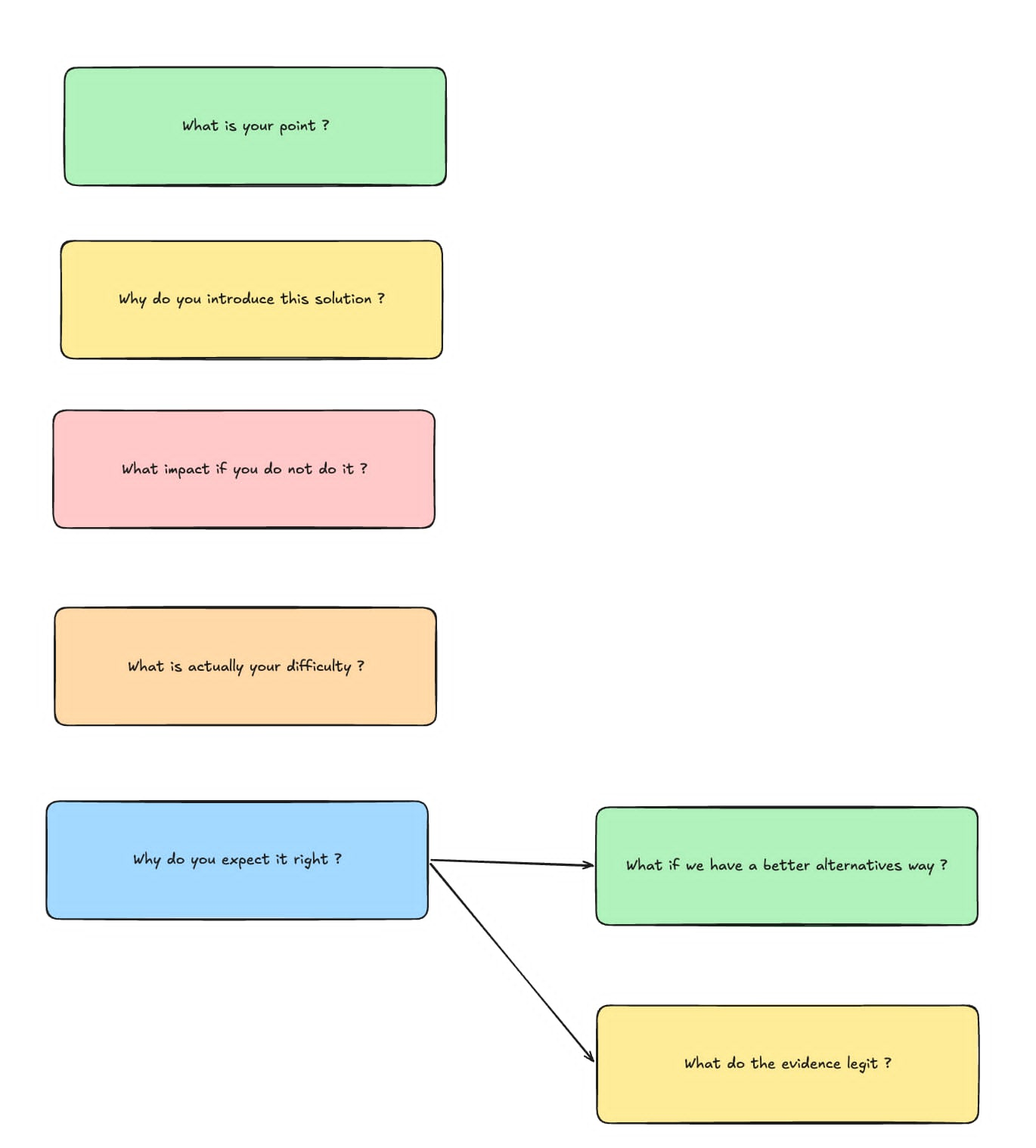
Before you answer an argument, ask five questions.
-
What is the exact claim?
-
What evidence supports it?
-
What has to be true for the conclusion to follow?
-
What is the strongest alternative explan-ation?
-
Which part of the argument would cause the most damage if it failed?
That last question is the key.
- Find the part the argument depends on most.
6. Number don’t speak for itself
-
Number: tell the story in context.
-
Claim + denominator + time window + comparator.
7. Fast and Slow Thinking
- It depends on situation you can choose Fast or Slow Thinking.
| Situation | Thinking Mode |
|---|---|
| Routine tasks | Fast |
| Familiar problems | Fast |
| High stakes | Slow |
| New or unfamiliar situation | Slow |
| Complex trade-offs | Slow |
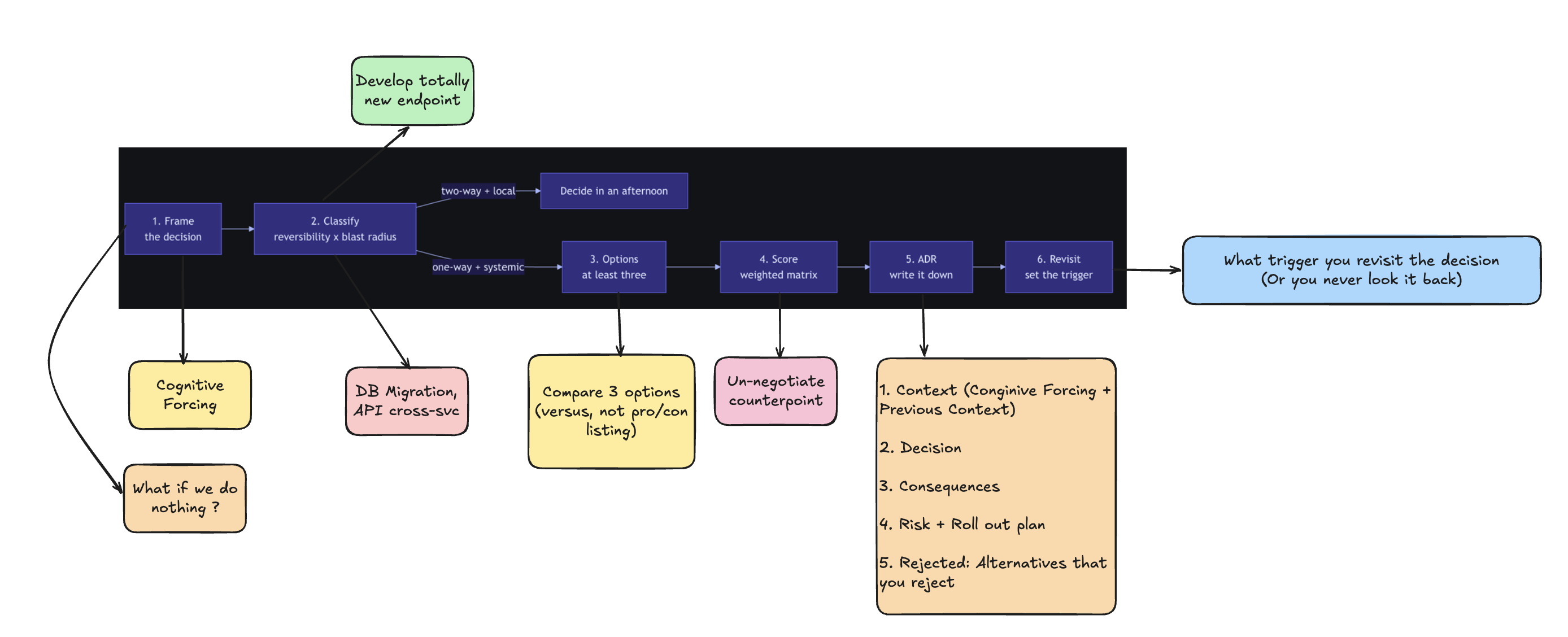
8. What is low and high stakes
-
Low stakes: The consequences are minor, easily reversible, or affect only a small area of work. Examples: choosing a meeting time, selecting a template, ordering office supplies.
-
Moderate stakes: The outcome affects timelines, budgets, or other teams, but the risks are still manageable. Examples: prioritising projects, selecting a vendor, adjusting a process.
-
High stakes: The decision has major financial, operational, or reputational consequences. Mistakes are costly or hard to reverse. Examples: hiring, contract negotiations, customer-impacting choices.
9. What is risk
-
Likelihood: How likely is it that this risk will occur?
-
Impact: If it happens, how serious would the consequences be?
-
Control: How much influence do I have over this risk?
-
Detectability: How easily can I spot early warning signs?
- Worst-case: What’s the most serious downside? Can we live with it?
- Best-case: What’s the ideal outcome? Is it worth aiming for?
- Most likely: What is the realistic expectation?
10. What to compare 2 options ?
| Option A | Option B |
|---|---|
| Main benefits | Main benefits |
| Main downsides | Main downsides |
| Risks | Risks |
| Costs | Costs |
| Who it affects | Who it affects |
11. When to Escalate and When to Own It
- Signs You Should Own the Decision
-
The stakes are low or moderate.
-
You have the knowledge and authority to act.
-
The decision falls clearly within your job scope.
-
The risks are small and manageable.
-
You are accountable for the outcome.
-
You can easily reverse or adjust if needed.
- Signs You Should Escalate the Decision
-
The decision carries significant financial, legal, or reputational risk.
-
The decision affects multiple teams or departments.
-
The issue involves sensitive personnel matters.
-
There are political or cultural complexities at play.
-
The decision requires resources or authority you do not control.
-
You are genuinely unsure and lack the information or expertise needed.
-
Practical Rule of Thumb: The 3 Tests
-
Impact Test
- If this goes badly, who is affected? Is the potential harm meaningful or easily contained?
- Authority Test
- Do I have the formal or informal mandate to make this call?
- Clarity Test
- Am I clear on the facts, trade-offs, and options? Or is the situation murky enough to warrant input?
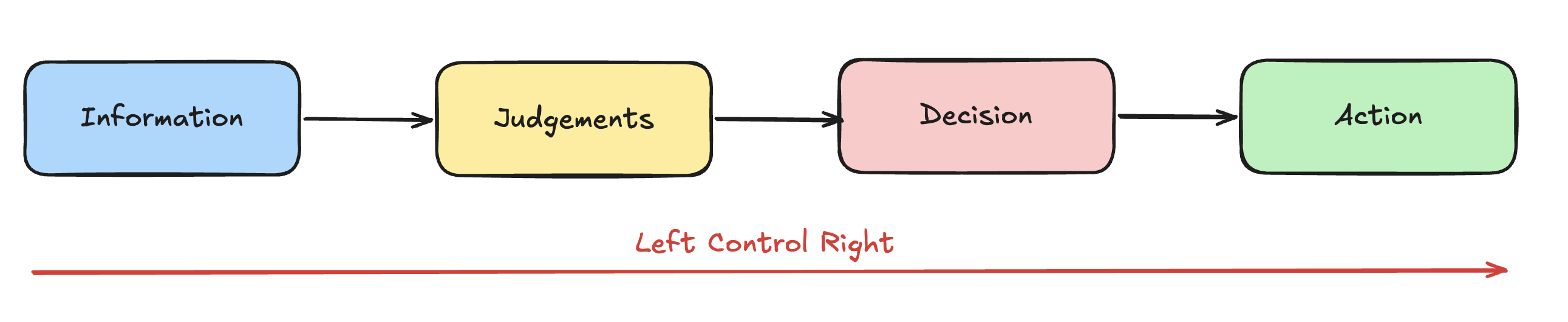
12. Handle Disagreement and Conflict
-
Not all the time you are the people who make decisions.
-
Know Group Thinking: hidden assumptions -> view the things more comprehensive.