

Viết về thinking framework khi explore product, charming, make judgements
T viết về thinking framework khi explore product, charming, make judgements của t
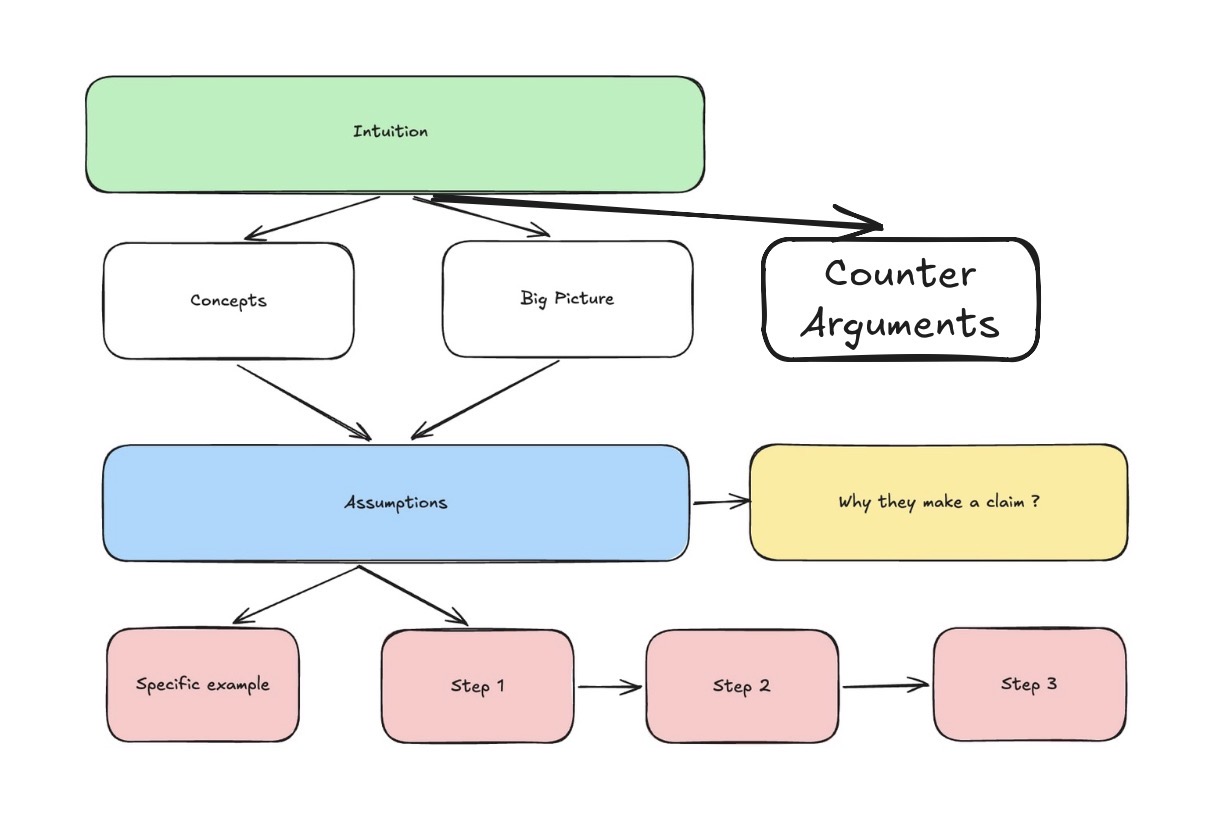
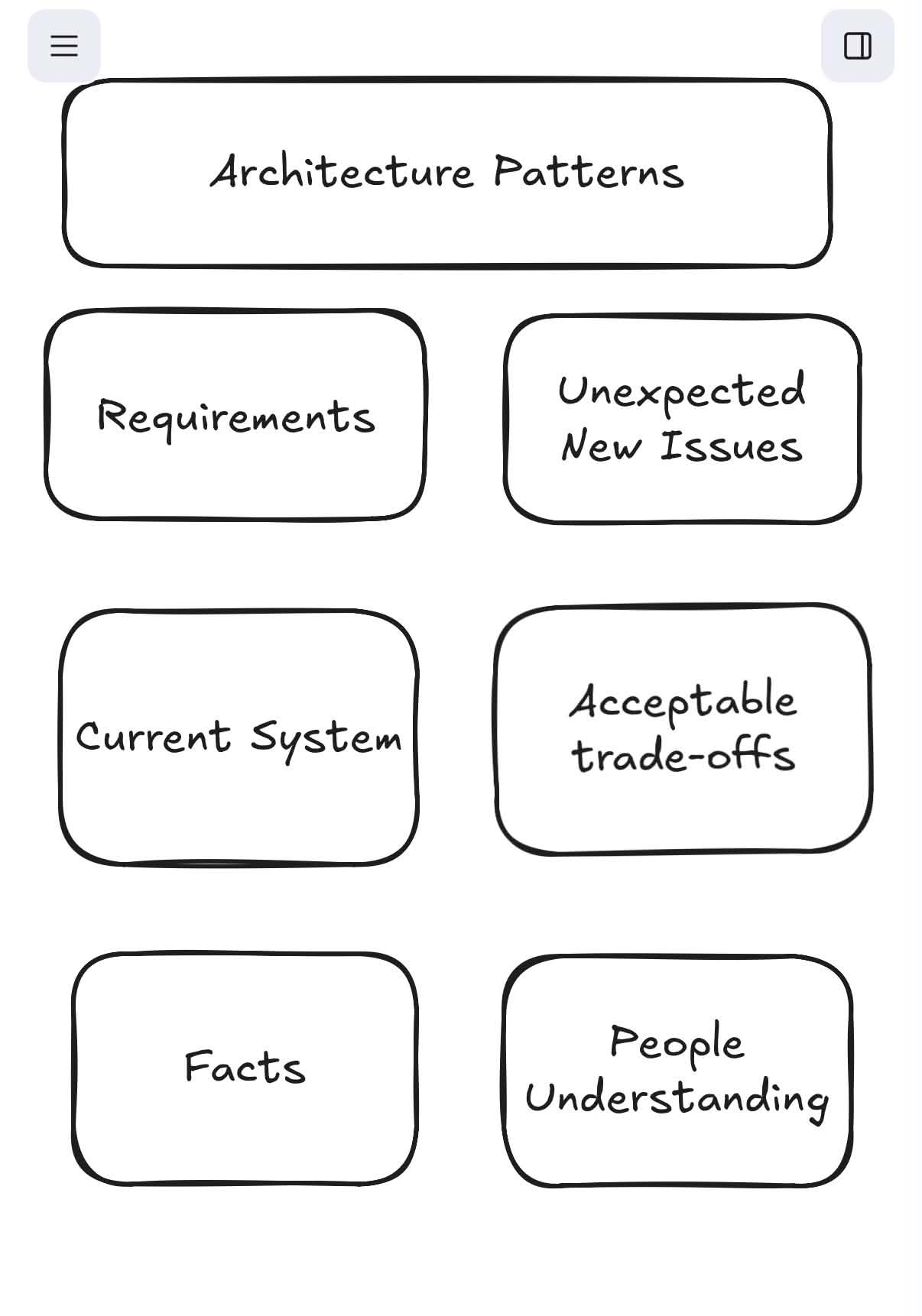
1. Explore products
1.1. Current system (Collect Facts)
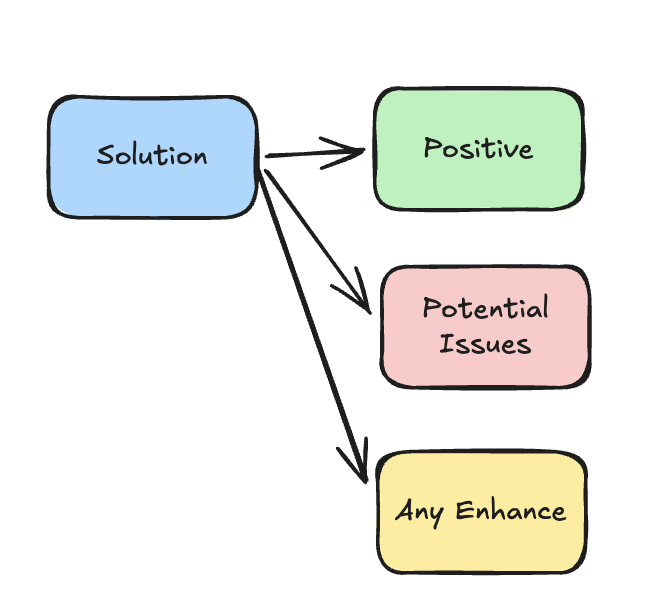
1.2. Proposed solution (What’s your idea will help)
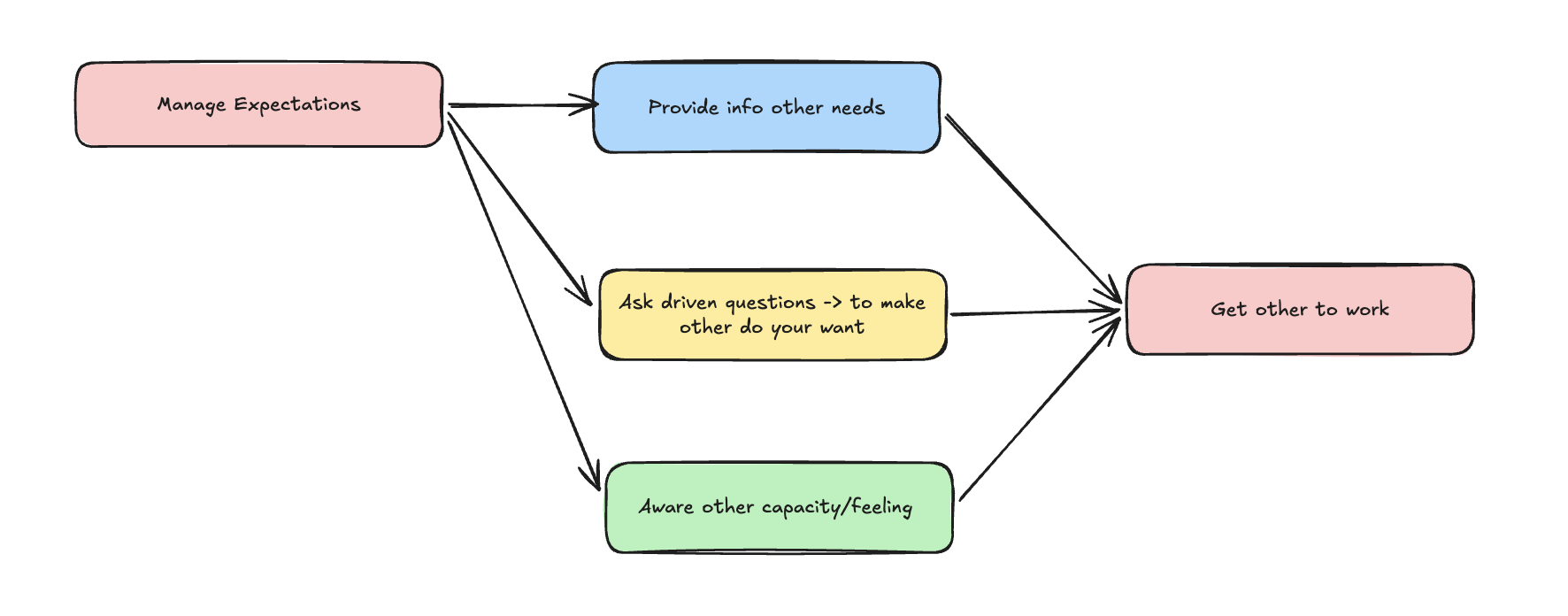
1.3. Stakeholder values and what need them to action
1.4. Risks
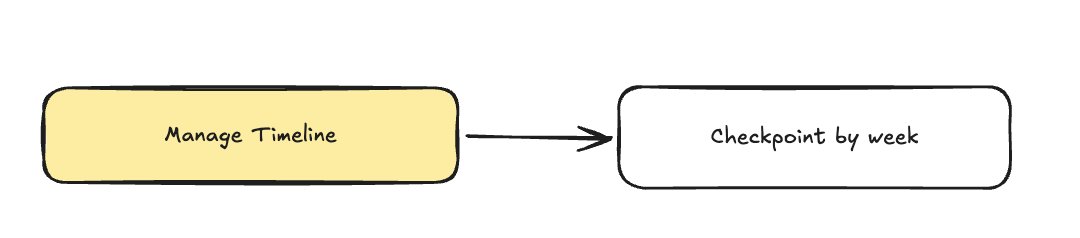
1.5. Action to do and timeline
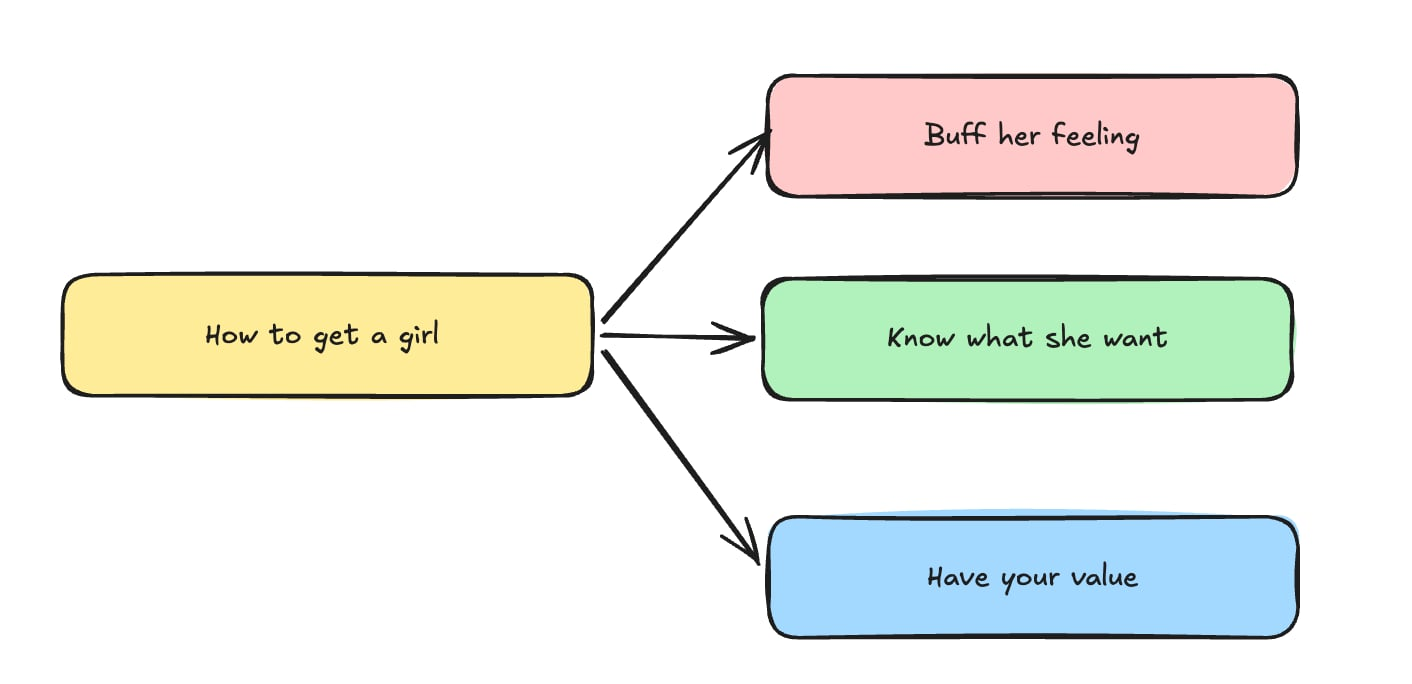
2. How to become more charming
2.1. Charming: Let people feel they are valued when talk to you: listen and ask right questions (5W - 1H)
2.2. How you care about her problem and can provide her
2.3. Responsibility: Safe and do not far from her
3. How to make judgements
3.1. Believe your thinking framework
3.2. Trying my best about this work
3.3. Make judgements framework
-
Judgement and success:
-
The role of risk
-
The role of luck
-
The role of timing
-
3.4. Myth
-
No one can good judgements between all fields.
-
CEO is good judgement with people, but not number. In contrast with CFO.
-
Advantage: Find the best situation to show your skill.
3.5. Relevant knowledge and experience (Incompleted knowledge)
-
Relevant knowledge: to the choice we make.
-
Experience: shortcut thinking to get the decision.
-
Context: current system.
3.6. Awareness
-
Your thought + other thoughts.
-
Your thought: mnt
-
Alice thought: abc
-
Bob thought: xyz
-
Reason: Alice # Bob
-
Read the room: perceptions of situations and people.
3.7. Trust
-
Source from trust documents, or trusted people.
-
Passive: We trust the supermarket to sell us food that won’t make us ill.
-
Trust must be earned: how you trust colleagues, and how colleagues trust you.
-
Do the source: is source of truth, or just others’comments.
3.8. Feelings and beliefs
-
You will have Feelings and beliefs: aware it.
-
Bias: we will bias to what information you have already read -> same things and bias.
-
belief and feelings is different: and people trust their thinking framework.
3.9. Choice
-
Alternative choices ?
-
Deep analysis.
-
Risk analysis.
-
Trade-offs and reasons.
-
Who is involved to make the choice ?
-
What happened as a result
3.10. Delivery
-
Idea is feasible ?
-
What task own by your team.
-
What task own by stakeholder.
-
Timeline
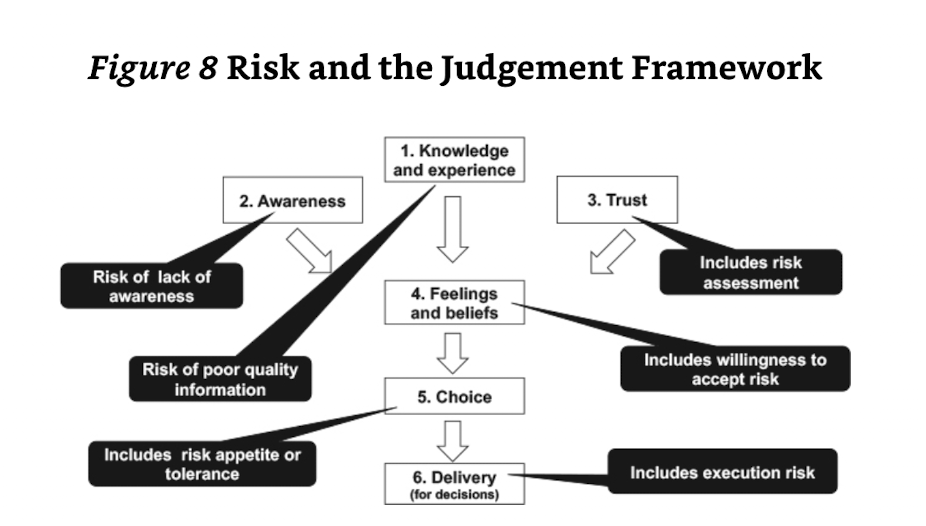
3.11. Risk and Judgement
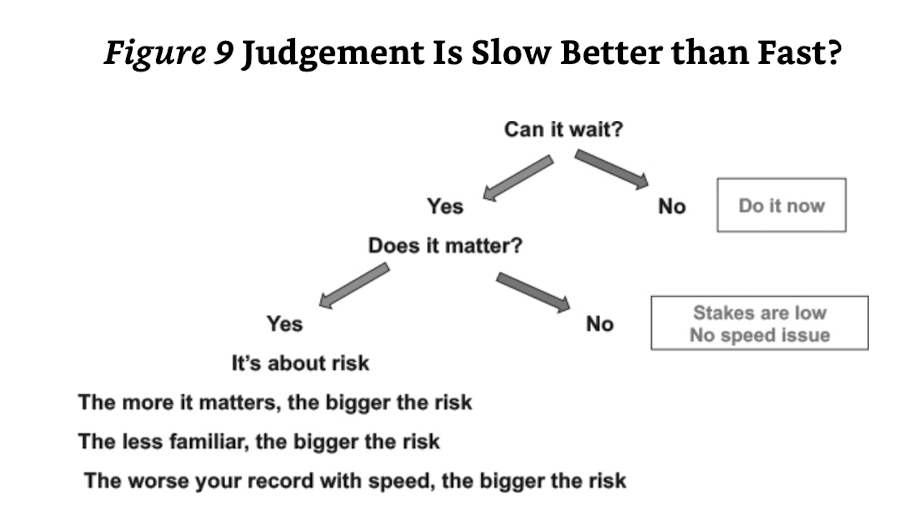
3.12. Speed and Judgement
-
In Action.
-
Stress.
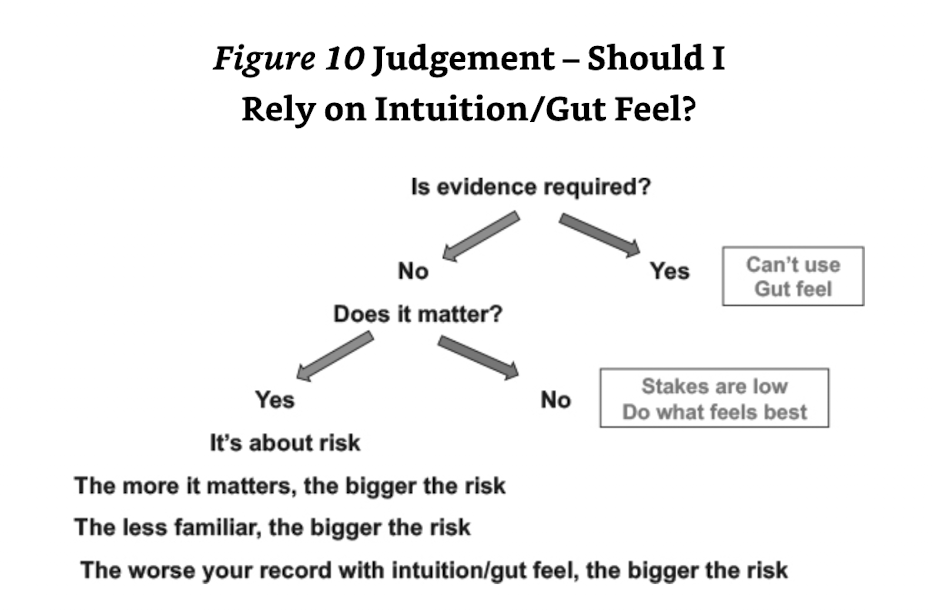
3.13. Gut Feeling Risk
3.14. Diversity and Judgement
3.15. Groups and Judgement
4. Framework for judgements
4.1. Knowledge and experience
-
To do: Seek out those who provide the knowledge and experience you lack. Keep a view of the world that recognises that the search for knowledge is constant.
-
Some danger signals: Complacency, overconfidence and failure to adjust to context. A belief that you don’t have much to learn in your role.
4.2. Awareness
-
To do: Maintain awareness by active listening, even with the inevitable pressures of the job. Keep control of how much information you get, particularly if it threatens to overwhelm you.
-
Some danger signals: Stopping listening, particularly in the light of success. Being overwhelmed by information overload.
4.3. Trust
-
To do: Recognise that who you trust and the weight you put on what they say are central to the quality of your leadership. Specify judgement as a quality you are looking for in your team and include it in selection and appraisal.
-
Some danger signals: Only trusting what you want to hear. Those you rely on not standing up to you when necessary.
4.4. Feelings and beliefs
-
To do: The ancient Greeks were all over this. ‘Know thyself’ was carved into the temple of Apollo at Delphi. For leaders that certainly includes being aware of the whole range of your feelings and beliefs, starting with being aware of your biases, how you apply your values and understanding how far you are led by your emotions.
-
Some danger signals: Rejecting, ignoring or not listening to information or views that do not confirm yours. Being unaware of how your emotions and feelings, including biases (particularly overconfidence in times of success), act as a danger to judgement.
4.5. Choice
-
To do: Make sure the right options are presented (with important ones not excluded and risks properly assessed) and the appropriate people are involved in the appropriate sequence and combination (individuals vs groups). Prioritisation, diary management and keeping meetings brief are essential to provide the right conditions for choice.
-
Some danger signals: Too much or not enough information. Being too busy to give what’s important the attention it needs.
4.6. Delivery
-
To do: Remembering that this is not an optional extra – good judgement is making something happen, not deciding to do it.
-
Some danger signals: Delivery not being thought through. Risks not being spelled out.