
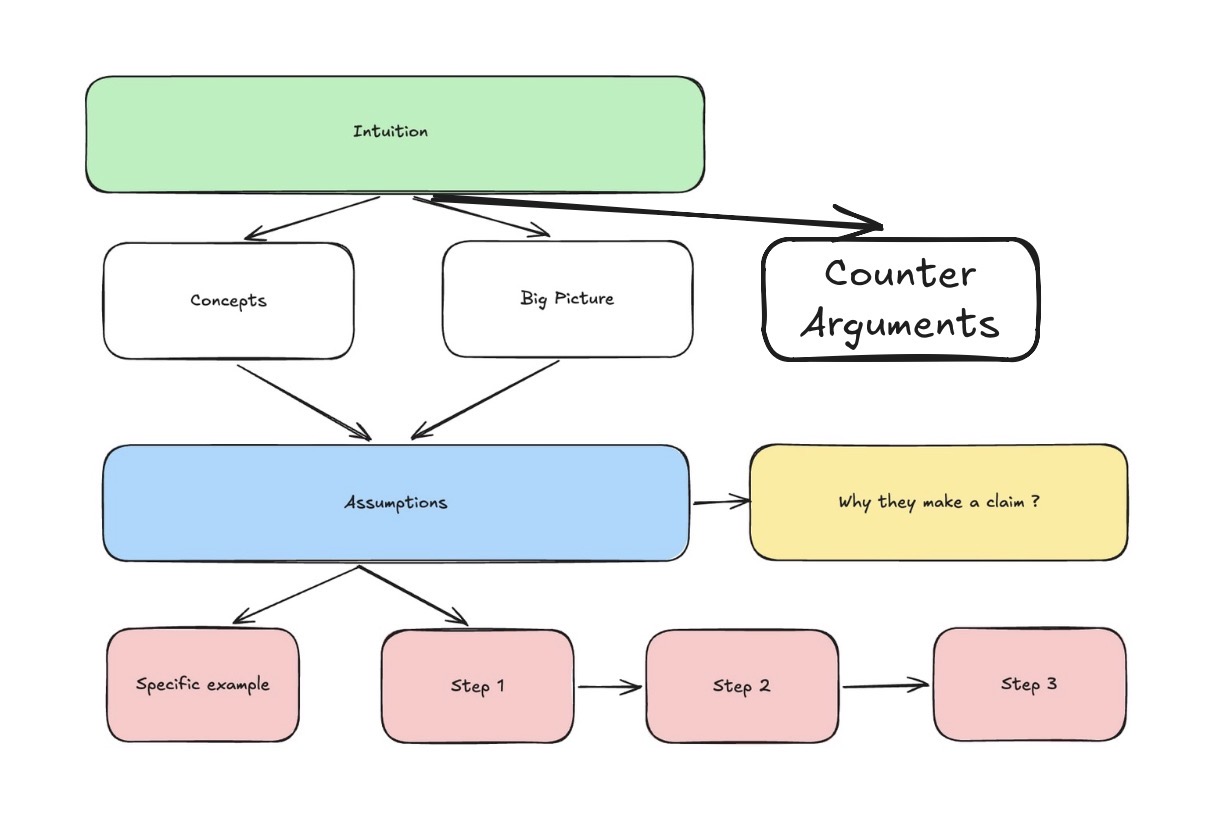



Design Collaborative Document System - Follow-up questions - Intuition First, Need more How
Here is solutions for Design Collaborative Document System - Follow-up questions.
Main topic:
-
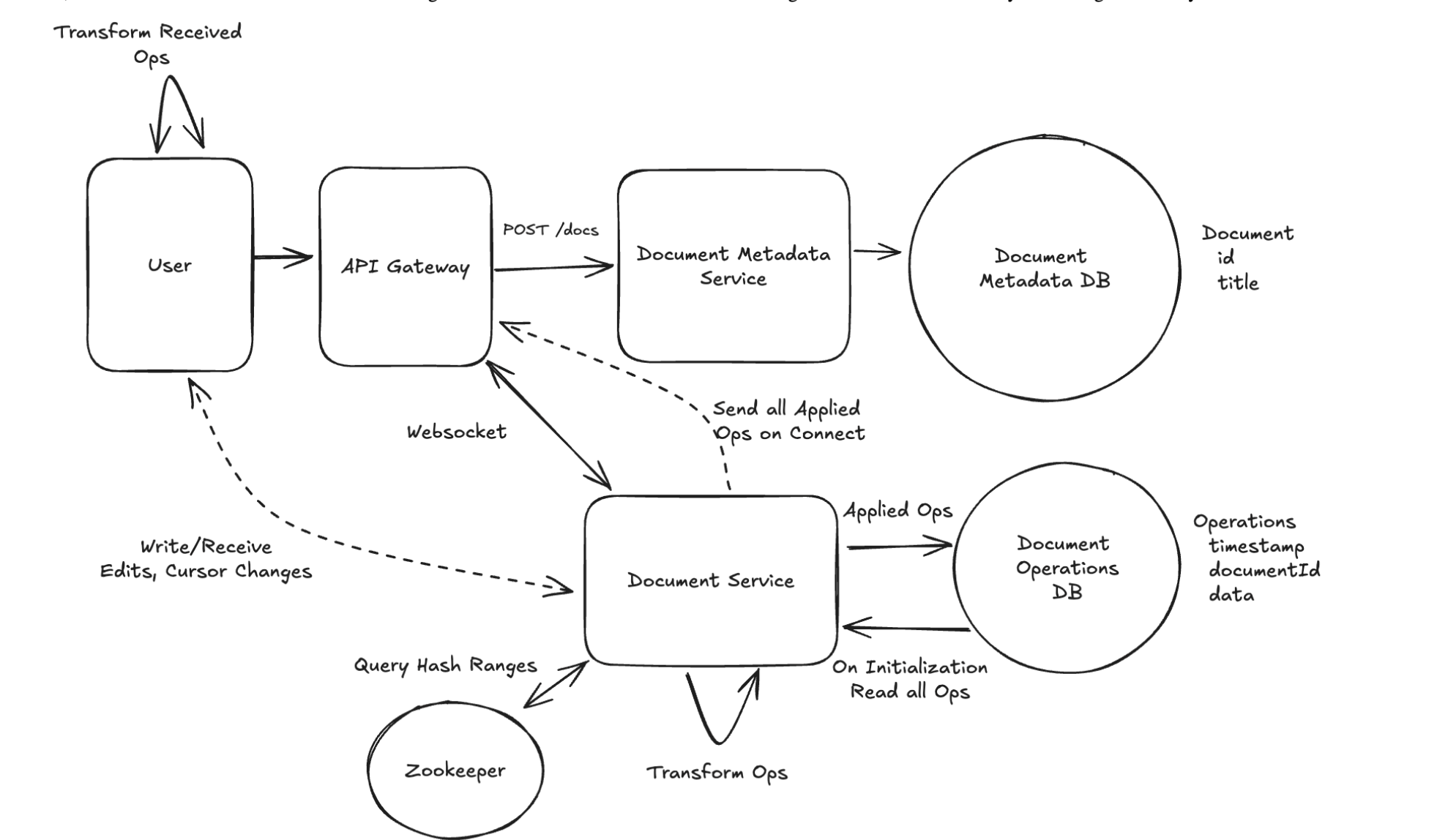
Handle conflict: concurrency write, OT(Operational Transformation) and CRDTs (Conflict-Free Replicated Data Types)
-
Fan-out websocket real-time update per collaborator.
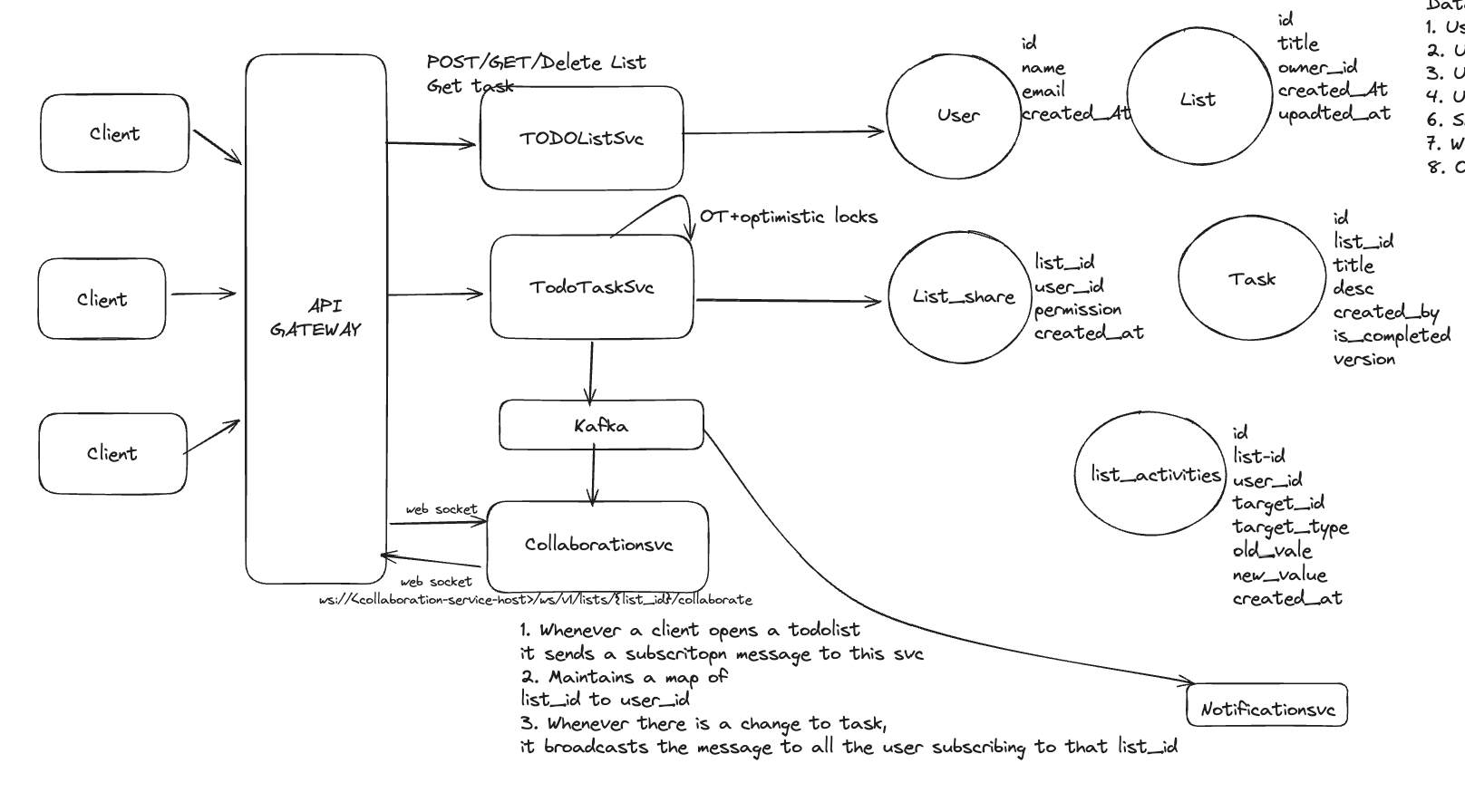
1. Patterns for Design collaborative Document System
-
Split 2 tables: Document table, Document Operation table -> Merge by LSM Tree (Log-based operations) later.
-
Split 2 services: documentsvc (to source of truth data) and collaborationsvc (to interact with user).
- Websocket in collaborationsvc: for Real-time Updates
- WebSocket sessions are sticky to a Collaboration Service instance. Subscriptions per list are tracked in Redis sets. Broadcasts are done in two phases: optimistic echo on produce, then commit update on DB apply.
Client -> WebSocket -> CollaborationSvc -> Kafka -> TodoTaskSvc -> DB -> Kafka(commit event) -> CollaborationSvc -> WebSocket clientsClients └─ WebSocket / HTTP └─ CollaborationSvc ├─ produce -> todo.ops └─ consume <- todo.commits └─ TodoTaskSvc ├─ consume <- todo.ops ├─ write DB └─ produce -> todo.commits └─ NotificationSvc └─ consume <- todo.commits └─ Analytics / ActivitySvc └─ consume <- todo.commits -
Versioning documents: using versionings or vector clocks for handle race condition.
-
Tasks: each update the document, have version
- Handle edit race condition - concurrency and ordering
- Clients send op {op_id, list_id, type, payload, client_version}.
- Collaboration produces to Kafka and echoes.
- Task Service consumes in partition order, writes with CAS semantics to ensure idempotency and monotonic server_version.
-
It stores op_id on the affected row(s) so retries are no‑ops.
- Text descriptions that truly need co‑editing can use a CRDT (RGA or JSON CRDT) stored as a blob and updated via ops. For most to‑do apps, field‑level updates with ordered ops are sufficient.
-
Partition list_id in kafka parititon of a topic -> We can have: 1 parititon = 1 list_id -> 1 consumer in consumer group.
- Operational Transformation (OT)
- Step 1: Alice sends first
-
Server receives
Insert(5, " World") -
Document becomes
Hello World -
Current positions:
Hello World
012345678901
-
- Step 2: Bob’s operation arrives
- Bob originally created
Insert(5, "!!!")-
But position 5 is no longer correct because Alice already inserted text.
-
The server transforms Bob’s operation.
-
Before transformation
Insert(5, "!!!") -
After transformation
Insert(11, "!!!") -
because “ World” has length 6.
-
Step 3: Apply transformed operation
Hello World!!! -
Everyone receives
Insert(5, " World") Insert(11, "!!!") - Every client ends with: Hello World!!!
- Step 1: Alice sends first
-
CRDT Data Structures
H → e → l → l → o │ ┌────────┴────────┐ ▼ ▼ W ! │ │ ▼ ▼ o ! │ │ ▼ ▼ r ! │ ▼ l │ ▼ d- Output:
Hello World!!!- Or:
Hello!!! World- If
Replica A's insert
comes before
Replica B's insert