



Writing about Context, Content in Clear Writing/Speaking
Writing about context, Content applied in Clear Writing/Speaking
1. Context and Content
-
Content: the word you put on the page.
-
Context: how the readers understand the word.
2. Know your reader
2.1. Personas
-
The best personas are based on research, not guesswork.
-
For example: Our reader is Marcus, the owner/manager of a pizza takeaway in the suburbs that employs two other people. Business is steady, but recently cash flow has been a little tight. Marcus is a 30-something father of two. He wants to know how the new tax regulations for part-time workers will affect his business, and what changes he might need to make.
2.2. What does your reader want or need? (Needed)
-
When [A], I need to [B] so I can [C].
-
Where A is the reader’s situation, B is the task they need to do, and C is the goal they want to achieve.
2.3. What does your reader know? (Needed)
-
What they already know ?
-
What do I want them to learn from my writing ?
-
How can I use what they already know -> explain what things I want to say ?
2.4. How does your reader feels ? (Needed)
-
Interested in your message -> be enthusiasm and curiousity.
-
Neutral -> do not interested, only need your message to help them complete the a task -> force to read but reluctant and impatient about it.
-
Negative -> confused, doubtful and sceptical, do not trust you to speak.
2.5. Research your reader (Needed)
-
Talk to them: only collect facts, do not assumption everything: see, hear, happened.
-
Talk to experience: teacher, coacher -> give their observations.
-
Reading in digital discussions: Threads, Reddit, Linkedin -> conversations of people around the subject.
3. Planning Docs
-
Read
-
Understand: if you don’t get your message across, it’s game over.
-
Remember: make reader learn and remember your message once they’ve read it.
-
Think and feel: They have more receptive about your ideas.
-
Act: persuade the reader to act on your message.
3.1. Write one-pager doc
-
Only 1 page is enough
-
Write a mission: your need, reason.
3.2. Flow of read of users.
-
Purporse.
-
Quick summary: in case people only read this far.
-
The current system.
-
The proposed solution and reason why to choose.
-
The detailed rules and explainations.
-
How they help them.
-
Action and contact points.
3.3. How wide and how deep ?
-
Docs: need both wide and deep
-
Your view: you have enthusiasm you want to get across.
-
Reader view: they have own priorities and their time, their attention is limited.
3.4. Some poplular error
-
Too many aims: only 1 aim at the same time is enough.
-
Kitchen sink syndrome: everything in once kitchen.
-
Priority the section based on weight of importance.
-
Make sure anyone feels existed and make their own contribution: do not make all things in the same doc.
-
If you overload it, the reader will skim-read or just stop reading altogether.
-
-
To counter the problem of writing by committee: try to get other people involved before the hands-on writing.
References: Why Writing by Committee Is Hard and How to Make It Easier
3.5. Mind map
-
Topic.
-
Subtopic.
-
Relationship between node: needs, leads to, happens with.
4. Research
Goal: Gather the information that will deepen your understanding and give your writing substance.
4.1. Do your research (Needed)
-
Basic facts
-
Background info
-
Authoritative sources
-
Reader opinions
-
The concensus
-
Alternative views: Opposite view or competitor product.
-
Changing opinions: how older ideas, other opinions changed overtime -> Do not outdated.
4.2. Think or act ?
-
Some like to read all the information first, then think it over until it’s time to start writing. By doing that, you get your subconscious mind on the job.
-
Other writers: find it easier to get to grips with new information by diving straight into the writing.
-
Taking notes: make you keep track the important knowledge.
4.3. Interviewing subject experts
-
Expert: dive deep in 1 topic, lack of big picture.
-
Need to prepare and curious to asking them anything: but need to related to their domain.
5. Length
Goal: Decide how much to write by balancing your mission, your message and the reader’s attention.
5.1. How much should you write?
-
What are the points you need to cover?
-
How much information do you need to give the reader? What do they have to learn in order to achieve their goal ?
-
Do you expect the reader to read everything? Can they easily pick out the bits they need, or jump to the part they want to read first?
-
What are the constraints of the format you’re using?
-
What other materials can support this writing? For example, can you direct readers to a website where they can find out more?
-
Being brutally honest, how interesting is your subject? What is your typical reader’s natural level of interest in it?
5.2. How to make them spend more time for you ?
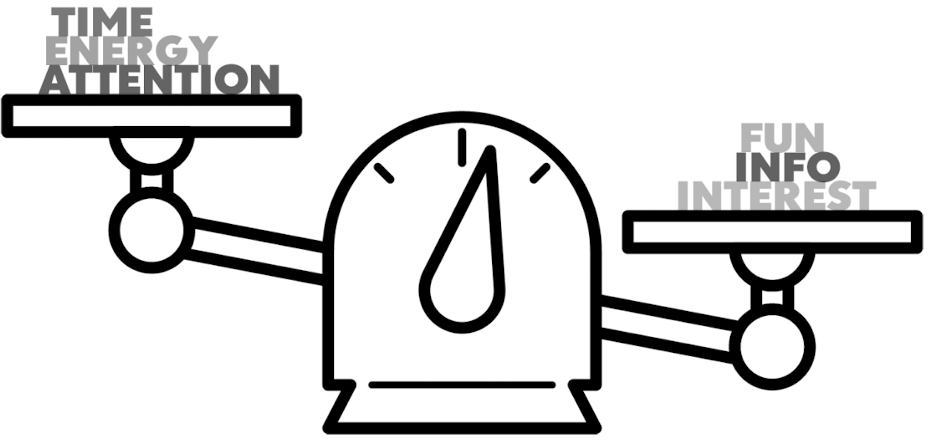
5.3. Think minutes, not words.
-
How long do it takes you to completed.
-
Do not think about number of words, only think about minutes you spent on it.
5.4. Length limit can improve focus
5.5. Write for people, not Google
- Have intentional, but not words.
6. Structure
Goal: Give your writing a clear structure to make it easier to understand.
6.1. Prior the important things (Needed)
-
Essentials: must have to understand it.
-
Explanation: more details to fill the reader’s knowledge.
-
Examples: different perspectives, metaphors, stories.
-
Externals: authoriative views -> credibility.
-
Extras: Nice to have stuffs.
6.2. Step by step
- Use a step-by-step structure to give practical guidance that the reader can use straight away.
6.3. Group by group
- If different reader groups need different information or levels of detail, write different pages or sections to provide it.
6.4. Use Q&A and problem/solution
- To speak to readers’ concerns, but only when it’s right for your subject.
7. Titles
7.1. What title do ?
-
To describe the content.
-
To set the tone.
-
To promise value.
7.2. Goal to use title
-
Speak to readers’ questions and address their knowledge gaps.
-
Bring in emotion and intrigue to get the reader’s attention, but make sure you don’t over-promise or mislead.
8. Using plain language
8.1. Working memory or shorterm memory
- It can only handle between five and nine items at a time.
8.2. Long-term memory
- After process -> pass to long-term memory.
=> Optimize the shorterm memory when people read.
8.3. Simple words (Needed)
-
Shorter.
-
Familiar.
-
Concrete: detailed in real world, not idea.
-
Unambigious: have context.
8.4. What is concrete
-
Find 5W - 1H.
-
What is actually happening?
-
Who is doing what ?
-
What real-world things are involved ?
9. Clear sentences
9.1. What sentence do
- A sentence: one event per sentence.
9.2. Write ideas first, then sentences.
-
Translate your idea in N sentence, it sentence have 1 event only.
-
S and V far together -> make it hard to read.
-
Order: keep the sentence in order, first -> second, make it suitable for reading flow.
9.3. Clarity first, grammar second
9.4. Use progressive sentences to link points together in logical or chronological order.
9.5. Say what is, not what is not.
- Use not only when challenging something.
10. Clear paragraphs
10.1. What paragraphs do
-
Milestone to move to new idea.
-
Multiple paragraphs = story.
10.2. Pagragraph structure
-
Topic sentence
-
Supporting sentences (Reasons, Evidence).
-
Close sentence.
=> Make sure each sentence connected together (make sure it about S V, S1 V1, S2 V2) -> keep the order points.
-> Each paragraph 1 idea.
- Including something: Details, Contrast, Causality, Sequence, Example, Exception.
11. How to talk to other
11.1. Keep most sentences short.
11.2. Address the reader directly: focus to main point.
11.3. Make it concrete: do not abstract idea.
11.4. Write idea that reader will know.
12. Ten writing traps
12.1. Abstractions
- Idea but not detail thing.
12.2. Nominalisations
- Noun make it complicated than verb.
12.3. Weak adverbs
- completely change = transform
12.4. Jargon
- term only understand in a group, not public.
12.5. Commercialese
- Word = use to impress the reader but not information.
12.6. Officialese
- Word = word of authority, professional
12.7. Weasel words
- Word like: up to, many, as many as, regarded,…
12.8. Hedging
-
It appears.
-
We suggest.
-
I think you’ll find.
-> Pause the client.
12.9. Uncertain language
-
Maybe
-
Should
13. Metaphor (Needed)
Goal: use to change other actions
13.1. What is it
- Bring some pictures into writing.
13.2. Metaphors express emotion
13.3. Metaphors affect action
- Brings scares, happy
13.4. Analogies: Compare with others
- You pay a flat, all-inclusive subscription every month to get the service, with no upfront cost
14. Bulidng knowledge (Needed)
Goal: Build reader’s knowledge from the foundation that they already know.
14.1. How people learn
- The most important single factor influencing learning is what the learner already knows.
14.2. Types of knowledge
-
Certainties: things that readers know and understand.
-
Knowledge gaps:: things that readers aware of, but do not fully understand.
=> Need how-to
-
Hidden knowledge: things that readers understand but do not aware of.
=> perform without thinking
-
Completedly unknown: things that readers do not aware of and do not understand
15. Four pathways to understanding
15.1. Functional: How to it work
- Understand to do the work: step by step.
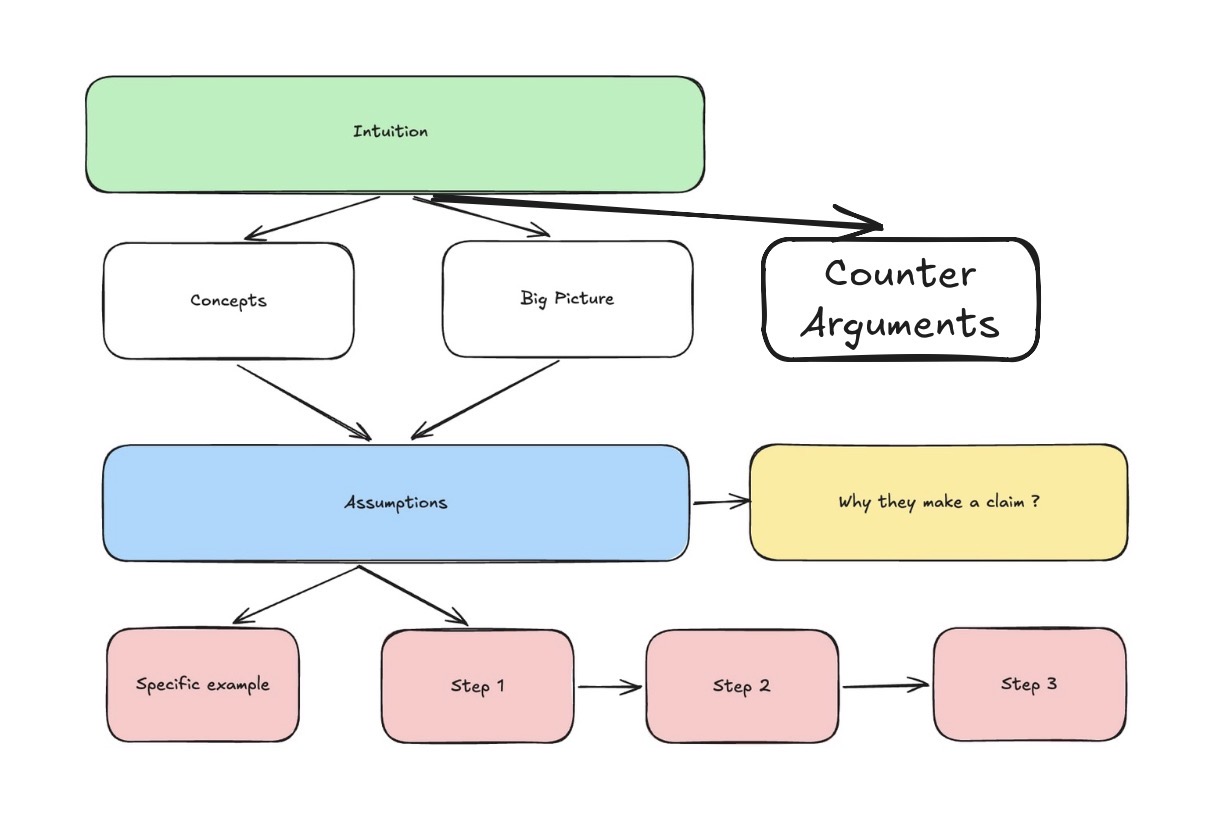
15.2. Intuitive: What is big idea
- Skim the big idea.
15.3. Analytical: show me the proof
- Show me the proof.
15.4. Personal: people matters most
- What is it impact human.
16. Empathy
16.1. Cognitive empathy
16.2. Emotional empathy
16.3. Adult, Parent, Child
-
Adult: here and now.
-
Parent: from parent.
-
Child: learn when you grow
-> make sure Adult - Adult
16.4. Pace your writing to make it do not overwhelmed
16.5. Be aware of your tone of voice, and keep it consistent.
17. Changing the reader’s mind
17.1. Knowledge and Belief
-
Knowledge: what we know -> update our knowledge without hesitation.
-
Belief: what we think -> argue for it
17.2. Motivated reasoning
- The more fact you know, the more fact you use to form belief.
17.3. When you persuade other, 3 cases
-
Agree with you.
-
Disagree with you: find way to change it
-
Dismiss your message: do not accept anything from you.
17.4. How to convince people disagree with you (Needed)
17.4.1. Authority: speak on your behalf.
17.4.2. Go to a goal they want to achieve.
17.4.3. Let them talk first
17.4.4. Social proof
17.4.5. Find more people similar of view with us
17.4.6. The facts + experience of others behind beliefs
17.4.7. Morals make it right or wrong
-
Care/harm: This is harmful to someone who should be cared for.
-
Fairness/cheating: This is unfair, because someone is cheating or taking advantage.
-
Loyalty/betrayal: This is a betrayal – of a country, a point of principle or anything else.
-
Authority/subversion: This is disrespectful to certain people, or undermines structures that we should keep.
-
Sanctity/degradation: This shouldn’t happen to anyone.
-
Liberty/oppression: This affects my freedom.
17.4.8. Writing both side pros/cons of an argument
17.4.9. Call their action
17.4.10. Challenge them
18. Make your message stick
18.1. Short
18.2. Speaking but not Writing
18.3. One-on-one rather than group
18.4. Relevant to other need
18.5. Elevated: higher status, older member talk.
18.6. link to life and real examples.
18.7. Repetition
18.8. Need to know, want to know.
18.9. Tell the story
- Be human, relatable, vivid and dramatic.
18.10. Switch your perspectives (Needed)
-
Move from human -> object and object to human
-
Example:
-
A service
-
People who benefit from it ? Office workers aren’t cacti.
-
Why not get them a water cooler?
-
19. UX Writing
19.1. What does the user want? (Needed)
-
What is the user trying to do here?
-
What information do they need?
-
What’s the best way to give it to them?
19.2. Think context
- Now picture your reader. They might be standing on a crowded train, peering at their phone as they do a quick bit of product research on the way to work.
19.3. Keep it simple
- More short -> more remember.
19.4. Users don’t read in order
19.5. Users don’t read, they scan
- But can read S + V
19.6. Section with what they get + what they action
- Tell readers exactly what they’ll get and the needs to deliver
19.7. Write for the screen
- But ability to read anyway to get context, but not in order.
19.8. Frequently asked questions (FAQs)
20. Design and format
Goal: visualize to make your message interesting and accessible.
20.1. Giving the reader whiteboard
- To write anything they want
20.2. Standfirsts
- Summary of what you’re about to say.
20.3. Use images, diagrams and emojis for something hard to describe
- Do not need to use text only -> visualize it.
21. Beating the blank page
21.1. Write for yourself first
21.2. Emergent writing
21.3. Write to learn
21.4. Leave gaps, take breaks and direct your energy where it will help you most.
21.5. Know your own weak spots and aim to improve them.
22. Editing and rewriting
Goal: Getting ideas on paper is only half the battle. The rest is whipping them into shape.
22.1. Edit checklist
-
Have you used simple, concrete and positive language wherever you can? (chapter 8)
-
If you use any specialised words, have you explained them to the reader? (chapter 12, jargon)
-
Is your writing accessible and inclusive to everyone who needs to read it? (chapters 8 and 16)
-
Is your structure working? Do your sections and paragraphs follow on logically from each other? Have you taken any detours? (chapter 6)
-
Have you used plenty of basic sentences, particularly for your most important points? (chapter 9)
-
Does each paragraph deal with a specific theme? Does it start with a key sentence and finish with a conclusion? (chapter 10)
-
Have you talked to the reader directly, when you need to? (chapter 11)
-
If you’ve used metaphors, do they genuinely make your meaning clearer? (chapter 13)
22.2. Multiple draft versins
-
The ugly first draft.
-
The chainsaw edit.
-
The surgical-tool edit.
-
Read it out loud.
22.3. Write first, then edit
23. Getting feedback
23.1. Get close to your reader
23.2. What to ask
-
Do the writing do its job ?
-
Do it easy to understand ?
-
What sort of person did the writer sound like ?
-
Did you feel the writer trying to help you ?
-
Was anything missing ?
-
What would you change ?
-
Would you be confident you giving this to friend, colleague or family member ?
23.3. Ask them to explain
23.4. Favour first-time feedback
23.5. Weighing up feedback
Goal: Weight the feedbacks to decide what changes to make.
-
Is it fair? Being honest with yourself, does the reviewer have a point?
-
Is it representative? Did anybody else make the same point?
-
Is it relevant? If you make this change, will it help you reach your target reader, or achieve the aims of this project?
-
Is it feasible? If you make this change, will it cause other problems that the reviewer hasn’t thought of?
24. Over to you
- Writing is about explaining your thinking outside.